


CALL US TODAY FOR A FREE INITIAL CONSULTATION
Criminal and Personal Injury Law
HIRING A LAWYER
Hiring a lawyer is an important decision that should not be based solely upon advertisements. If you are seeking a competent criminal defense, you should check if the lawyer is board certified in criminal trial law, and if he or she has previous success in the courtroom.
Criminal Appeals Lawyer
The Criminal Appeals Process
The criminal appeals process is quite different than the trial process for a criminal case. It is important to have a lawyer on your side who understands the appeals process. Our criminal appeals law firm can review your case and determine whether the appeals process is right for your case.
Follow a manual added link

Criminal Appeals
Follow a manual added link

Criminal Defense
Follow a manual added link

Post Conviction Relief
ABOUT

Trevena, Pontrello and Associates is a boutique law firm practicing in the areas of Criminal Law and Criminal Appeals.
QUICK LINK
LOCATION
CONTACT
Address
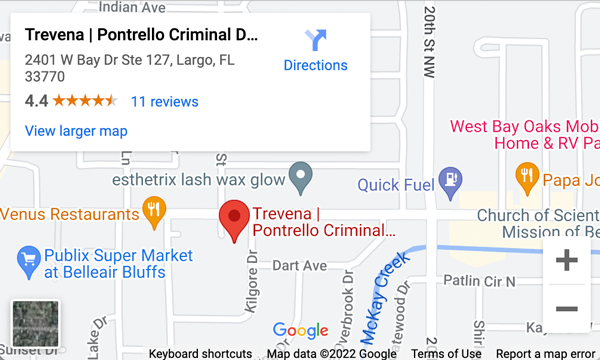
2401 W Bay Drive
Suite 127
Largo FL 33770
Phone
(727) 581-5813
(727) 403-3731